









































Copper Kitchen Sinks for Every Style
Copper kitchen sinks are the only sink material that actively kills bacteria on contact, thanks to copper's natural oligodynamic effect. Unlike a fixed factory finish, solid copper develops a living patina over months and years — shifting from bright penny tones to deep chocolate browns that hide water spots and scratches better than any other metal sink.
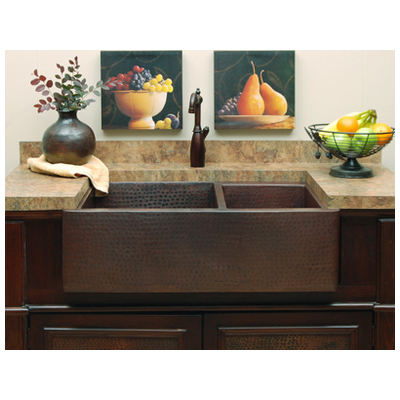
Most quality sinks in this category are made from 14 to 16 gauge recycled copper, often hand-hammered by artisans in Mexico. The hammered texture isn't just decorative — it dampens dish-clatter noise and disguises the small dings that come from daily cooking. Browse the full kitchen sinks collection or compare against stainless steel and fireclay alternatives.
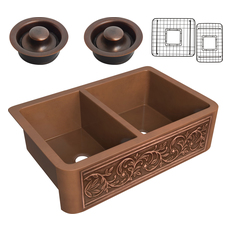
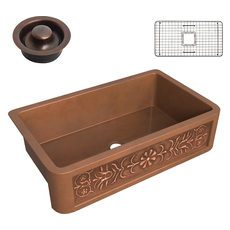
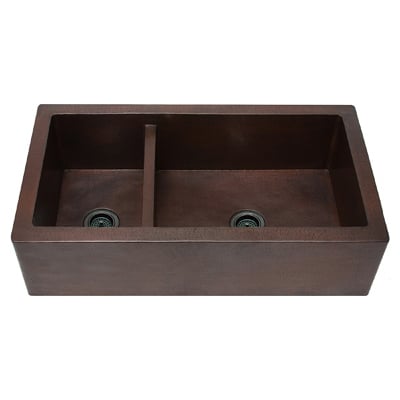
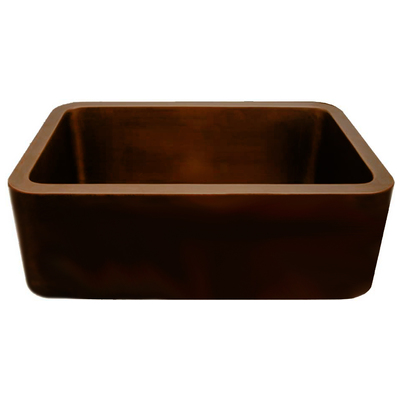
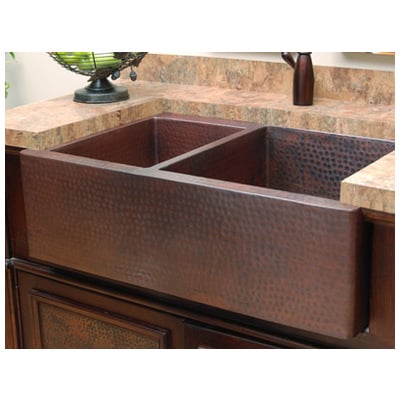
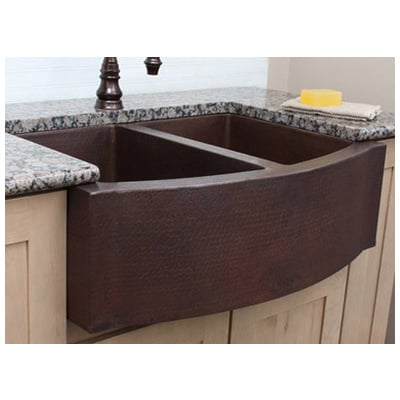
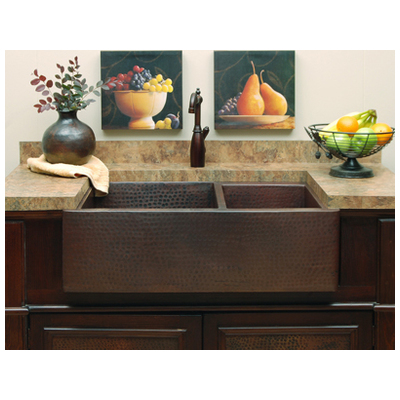
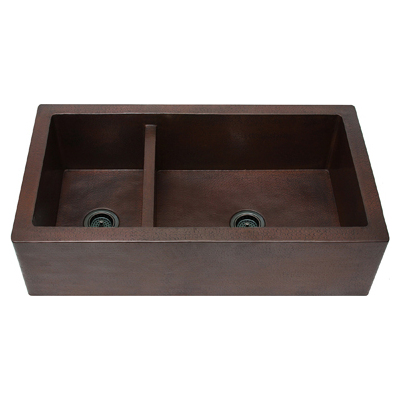
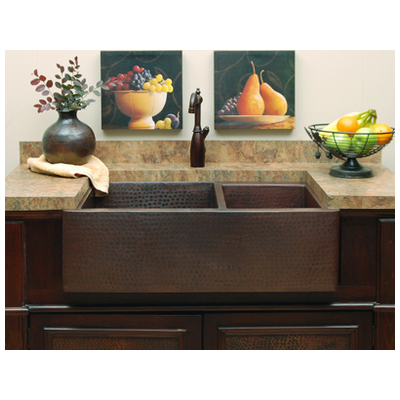
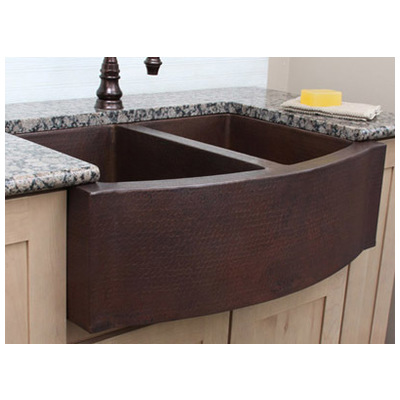
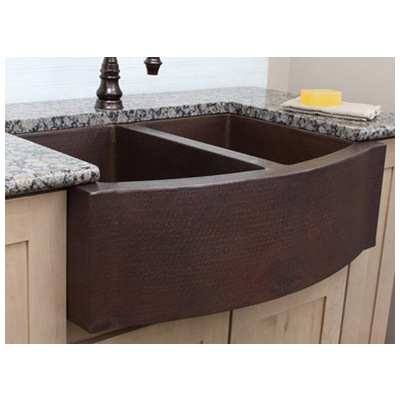
For rustic, Tuscan, and Southwest kitchens, the copper farmhouse sink with apron front remains the signature choice. Pair with oil-rubbed bronze or unlacquered brass faucets for a finish that ages alongside the sink.
 FILTER BY


















Frequently Asked Questions
Will a copper sink turn green or develop verdigris?
Indoor copper sinks rarely turn green. Verdigris requires constant outdoor moisture and acidic exposure. Inside a kitchen, copper darkens through brown, bronze, and near-black tones as it oxidizes. If a green spot does appear from a citrus splash or harsh cleaner, buff it out with a soft cloth and copper wax — the patina will rebuild within weeks.
What cleaners are safe for copper sinks?
Use only mild dish soap and warm water. Avoid bleach, ammonia, vinegar, citrus-based cleaners, and any abrasive scrub — all strip the patina and leave bright pink blotches that take weeks to blend back in. For protection, apply a thin coat of carnauba-based copper wax every few months to slow oxidation and repel water spots.
Is the antimicrobial claim about copper sinks real?
Yes — copper is EPA-registered as an antimicrobial surface. Lab studies show solid copper kills 99.9% of common bacteria like E. coli and Staph within two hours of contact. This makes copper uniquely suited for sinks where raw meat and produce are rinsed. Note that lacquered copper loses this benefit because the coating blocks contact.
Do copper sinks dent easily from dropped pots?
A 14-gauge hand-hammered copper sink resists dents well — the hammered texture work-hardens the metal and disguises any small impacts. Lighter 18-20 gauge copper (often found in budget imports) will dent from a dropped cast-iron skillet. The hammered surface is the key reason most premium copper sinks use this finish rather than smooth.
What faucet finish goes best with a copper sink?
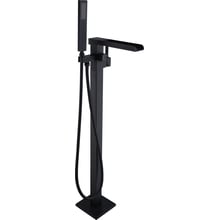
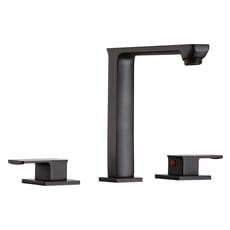
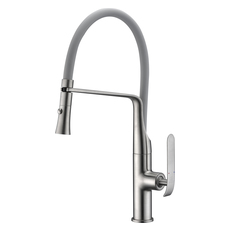
Oil-rubbed bronze and unlacquered brass are the most popular pairings — both develop their own patinas that complement copper's color shifts. Polished chrome and stainless steel create a jarring contrast and are generally avoided. Matte black works for modern kitchens. Keep the faucet finish consistent with cabinet hardware for a cohesive look.