












































Undermount Kitchen Sinks for Stone Countertops
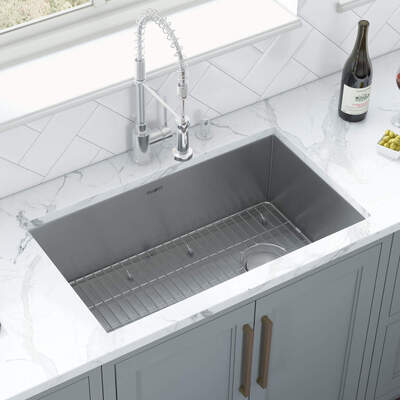
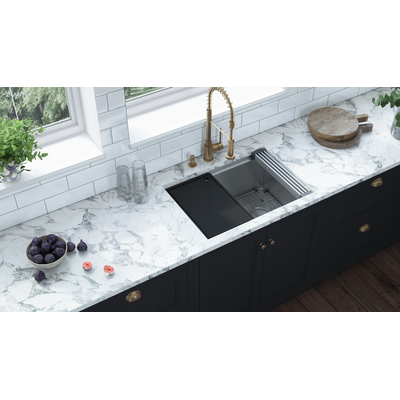
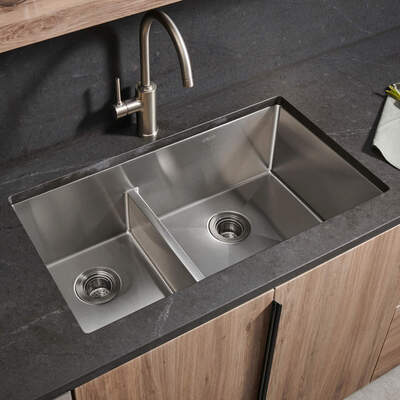
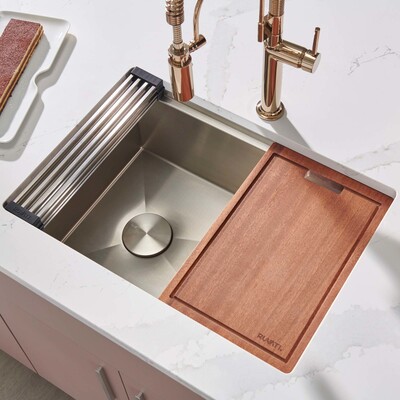
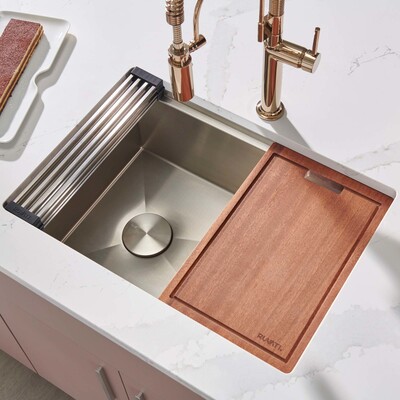
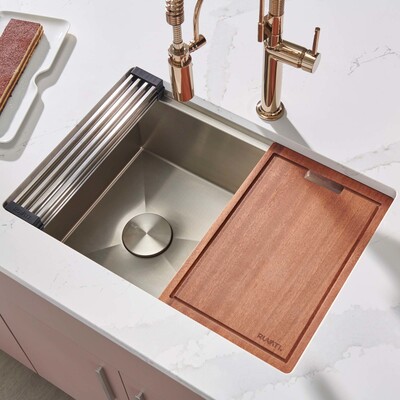
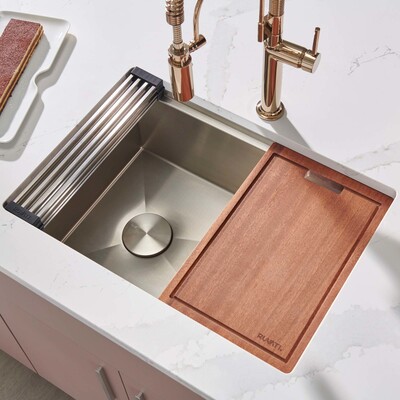
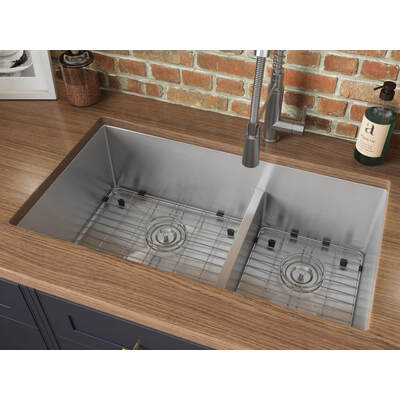
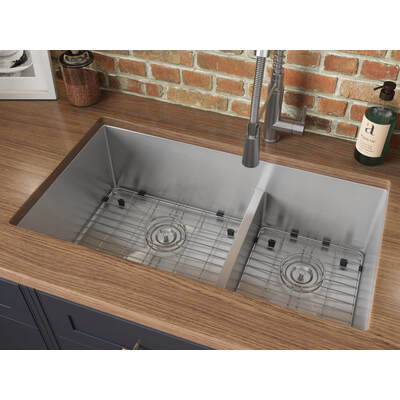
Undermount kitchen sinks install beneath the countertop, leaving a clean stone edge with no rim to trap crumbs or standing water. Because the sink hangs from the underside of the counter, it requires a solid-surface countertop like granite, quartz, marble, or solid wood — laminate counters can't support the cutout edge.
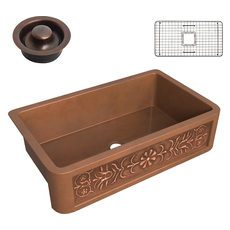
The biggest day-to-day advantage is cleanup: you can sweep crumbs and water directly from the counter into the bowl without catching on a lip. That single detail is why undermount has become the standard in mid- and high-end kitchen remodels. Compare with the full kitchen sink collection or browse alternative mount styles like farmhouse sinks and apron-front sinks.
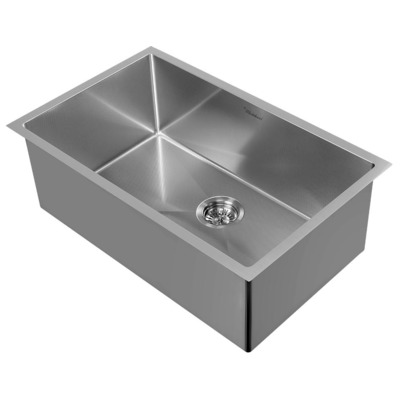
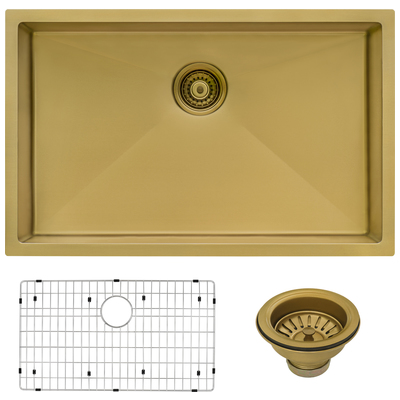
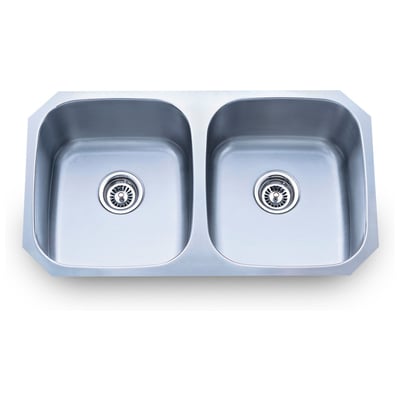
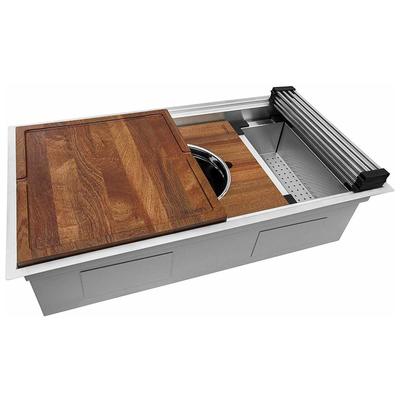
Most undermount models in this collection are stainless steel, but composite granite and fireclay options are also available for buyers who want color or a softer look.
 FILTER BY















Frequently Asked Questions
Can I install an undermount sink with laminate countertops?
No. Laminate countertops have a particleboard core that swells when exposed to water at the cut edge, and they can't support a sink hanging from the underside. Undermount sinks require solid-surface counters — granite, quartz, marble, soapstone, concrete, or solid wood. If you have laminate, choose a drop-in (top-mount) sink instead.
What is sink reveal and which type should I pick?
Reveal is how the countertop edge lines up with the sink rim. Positive reveal shows a thin band of sink rim — easiest to fabricate and most forgiving. Zero reveal is flush — the cleanest look but requires precise templating. Negative reveal hides the rim under the counter — hardest to clean where stone meets sink. Most homeowners pick positive reveal.
How is an undermount sink attached to the countertop?
The sink is held in place by a combination of silicone sealant and mechanical clips or brackets epoxied to the underside of the stone. For heavier fireclay or composite sinks, fabricators typically add wood or metal cross-supports inside the cabinet. The countertop itself bears most of the weight, which is why it must be a solid surface.
Are undermount sinks harder to clean than drop-in sinks?
The bowl itself is easier to clean because there's no rim catching crumbs on the counter — you wipe debris straight into the sink. However, the silicone seam where the sink meets the stone can collect grime over time and may need to be resealed every few years to prevent mildew and water seeping into the cabinet below.
Can I replace a drop-in sink with an undermount without changing countertops?
Usually not. The existing cutout for a drop-in is sized for a sink with a wider rim, so the hole is too large for most undermount models. Even if dimensions worked, the cut edge of the counter must be polished on an undermount install since it's visible. Plan to replace the countertop or have a fabricator re-cut and polish the existing one.