




































Penny Round Mosaic Tile
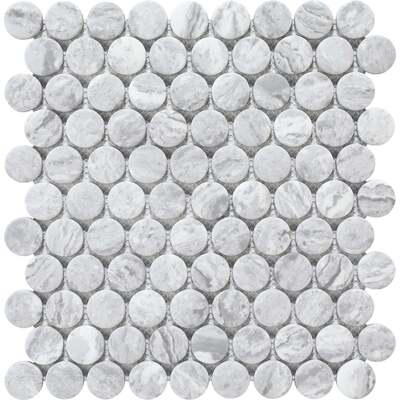
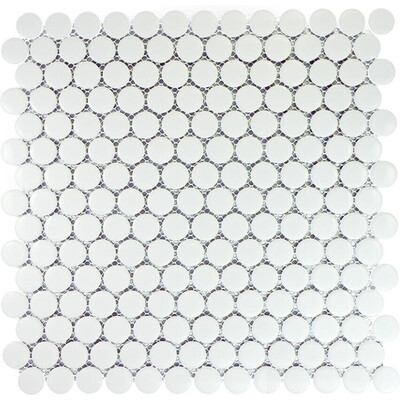
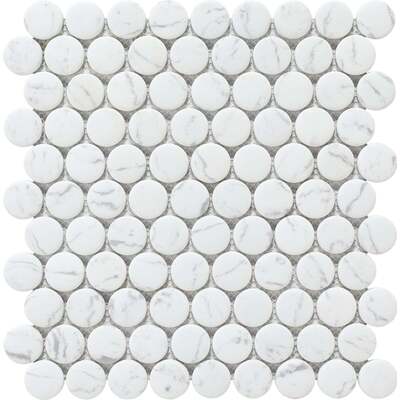
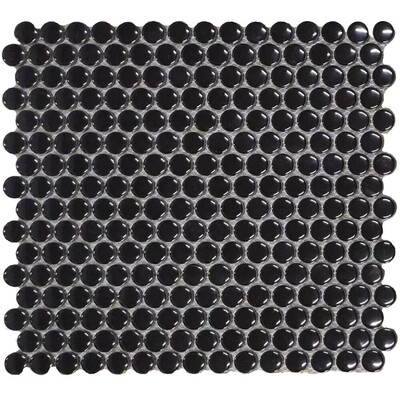
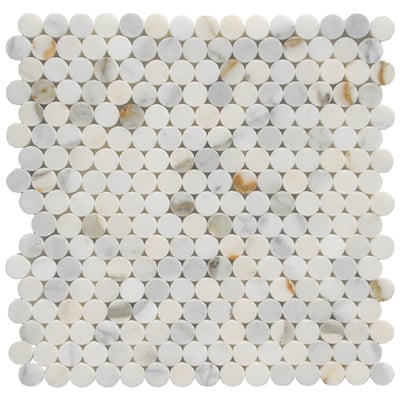
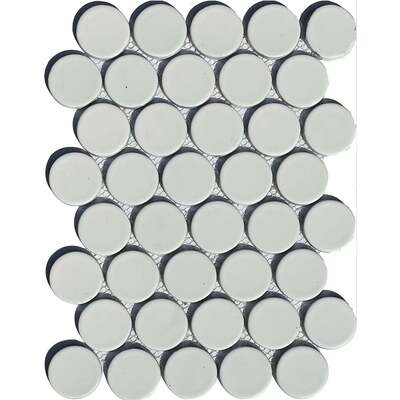
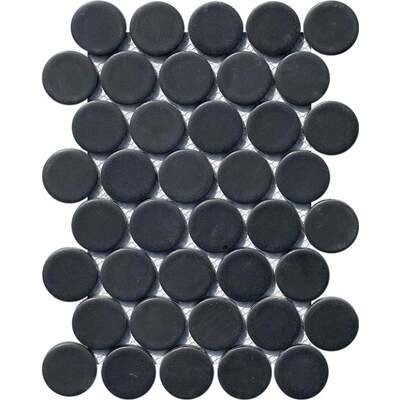
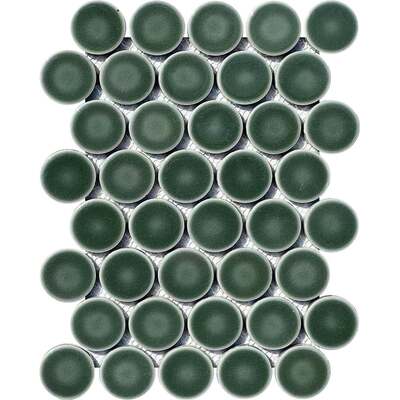
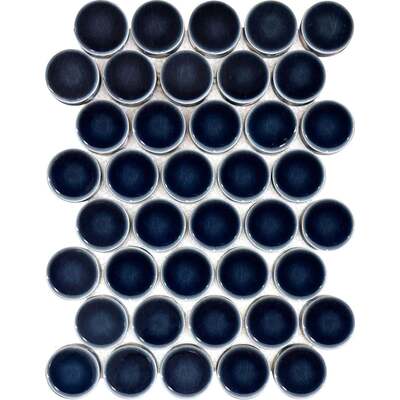
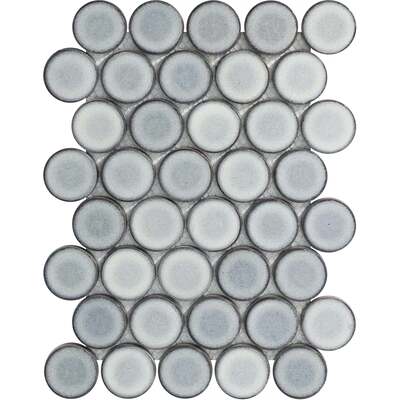
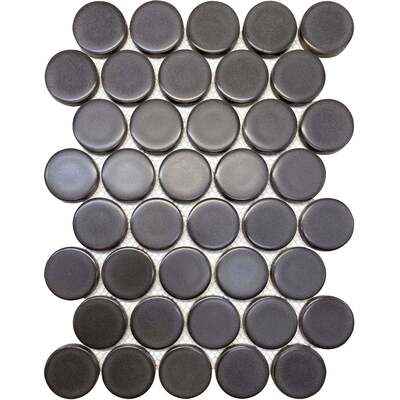
Penny round mosaic tile features small circular pieces — typically 3/4" to 1" in diameter — set on mesh-backed sheets, creating a dense network of grout lines that defines the entire look. The pattern traces back to early 1900s bathroom floors, but today's penny rounds work just as well in modern showers and contemporary kitchen mosaic backsplashes.
The defining characteristic of penny rounds is the grout-line density: with so many small circles per square foot, your grout color choice fundamentally changes the look. Matching grout lets the tile read as a continuous color field; contrasting grout makes each penny pop individually. This also makes penny mosaic one of the few glossy-friendly options safe for shower pans, since the grout network provides traction even when the tile face is smooth.
For pattern alternatives, compare penny against hexagon mosaic for a sharper geometric look or brick mosaic for a more linear feel.
 FILTER BY
Frequently Asked Questions
Are penny round mosaics safe for a shower floor?
Yes — penny rounds are one of the most popular shower-floor mosaics precisely because the dense grout-line network between small circular tiles creates a high-friction surface. Even glossy-glazed penny tiles typically pass the DCOF 0.42 wet-traction threshold thanks to the grout joints. The small sheets also conform well to the slope toward a center drain.
How do you cut penny round tiles at edges and corners?
Cutting penny rounds is more involved than rectangular mosaics because any cut produces a partial circle, which can look awkward at exposed edges. Most installers either remove individual pennies from the mesh and reposition full circles to fit, halve pennies on a wet saw for a clean straight border, or finish the edge with a Schluter metal profile rather than cutting at all.
What grout color works best with penny round mosaic?
It depends on the effect you want. Matching grout (white grout with white pennies) makes the field read as one continuous textured surface — subtle and modern. Contrasting grout (dark grout with white pennies, or vice versa) defines every circle individually and emphasizes the vintage character. Use unsanded grout in 1/16" joints for tightly spaced penny sheets.
Do penny round tiles look dated or vintage?
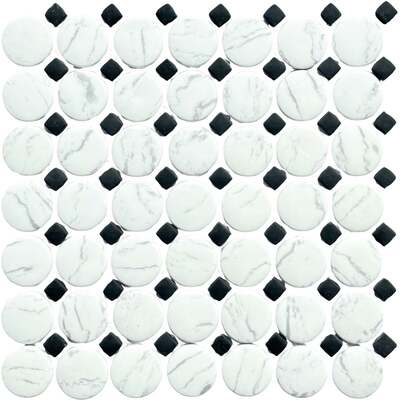
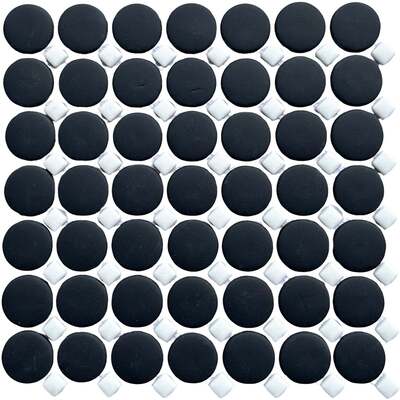
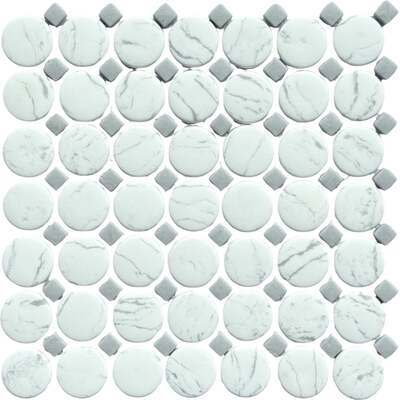
Not necessarily. While penny rounds originated in early 20th-century bathrooms, they've made a strong comeback in contemporary design. Black penny with white grout reads modern and graphic; matte gray penny with matching grout reads minimalist; classic white penny with black grout leans vintage farmhouse. The shape itself is timeless — the color and grout combination determines the era.
How much penny mosaic should I order for my project?
Calculate your installation area in square feet, then add 15% overage for waste — slightly more than the 10% standard for square tile, because trimming pennies at perimeter cuts wastes more material. Most penny mosaic sheets cover approximately 1 square foot each. For shower floors with curbs and drain cuts, consider 18–20% overage to be safe.